Eco-friendly is on every label these days, and floristry is no different. Many shops now say their flowers are green, natural, or earth-friendly, especially when people in Surrey want better choices for weddings, events, and everyday bouquets. The problem is that not every claim is backed up by real action.
Greenwashing in floristry can look like this: a single recycled ribbon on a bouquet filled with imported flowers shipped by air, or a tag that says “natural” on an arrangement built in plastic foam. It might be a pretty photo on social media with a caption about “sustainable blooms,” but no details on what that actually means. These choices still affect local ecosystems, waste systems, and the climate.
Our goal here is to give you a clear checklist so you can sort real eco-conscious florists from clever marketing. We will look at certifications, sourcing proof, foam-free mechanics, packaging, and delivery emissions, so you can feel confident about where your flower budget is going. With fall holidays and gatherings around the corner, this is a great time to make sure the flowers on your table fit your values as well as your style.
True sustainability starts with clear standards, not vague words. In floristry, you might see references to programs like Fairtrade, Rainforest Alliance, or Veriflora on imported flowers. These usually touch on things like fair labour, safer pesticide use, and better environmental practices on farms.
Here is how you can check if a florist is being specific, not just trendy:
Honest florists are also clear about their own policies. Instead of one short line that says “we care about the planet,” look for details like:
Real transparency often sounds a bit more human and nuanced. A florist might say that not every flower can be both local and certified at the same time, especially in certain seasons in Metro Vancouver. They might explain how they balance things, for example, choosing local first when local fields are producing well, then leaning on certified imports when local options are limited. That kind of honesty is a good sign that they are thinking carefully, not just chasing a label.
If you care about the planet, one of the biggest things to ask is where and when flowers are grown. Truly eco-conscious florists try to choose seasonal and locally grown stems whenever they can, especially from growers in British Columbia and the Fraser Valley. This usually means shorter transport routes, fresher flowers, and direct support for nearby farms.
A few simple questions can tell you a lot:
In late October in Surrey, seasonal choices often include sturdy blooms like chrysanthemums, some dahlias if the frosts are gentle, plenty of autumn foliage, textural seed pods, and classic roses. Tender blooms that hate cold or that are out of season locally usually need long-distance shipping. If a florist says they can get any flower at any time without a second thought, they may be leaning heavily on air-freighted imports.
Watch for red flags such as:
By contrast, a florist who names growers, mentions regions, or shares photos from farms is usually paying closer attention to their supply chain.
Floral foam is one of the clearest areas where you can check if a florist is serious about sustainability. Foam bricks may look harmless, but they are made from petroleum-based plastics, they shed microplastics into water, and they do not break down in compost.
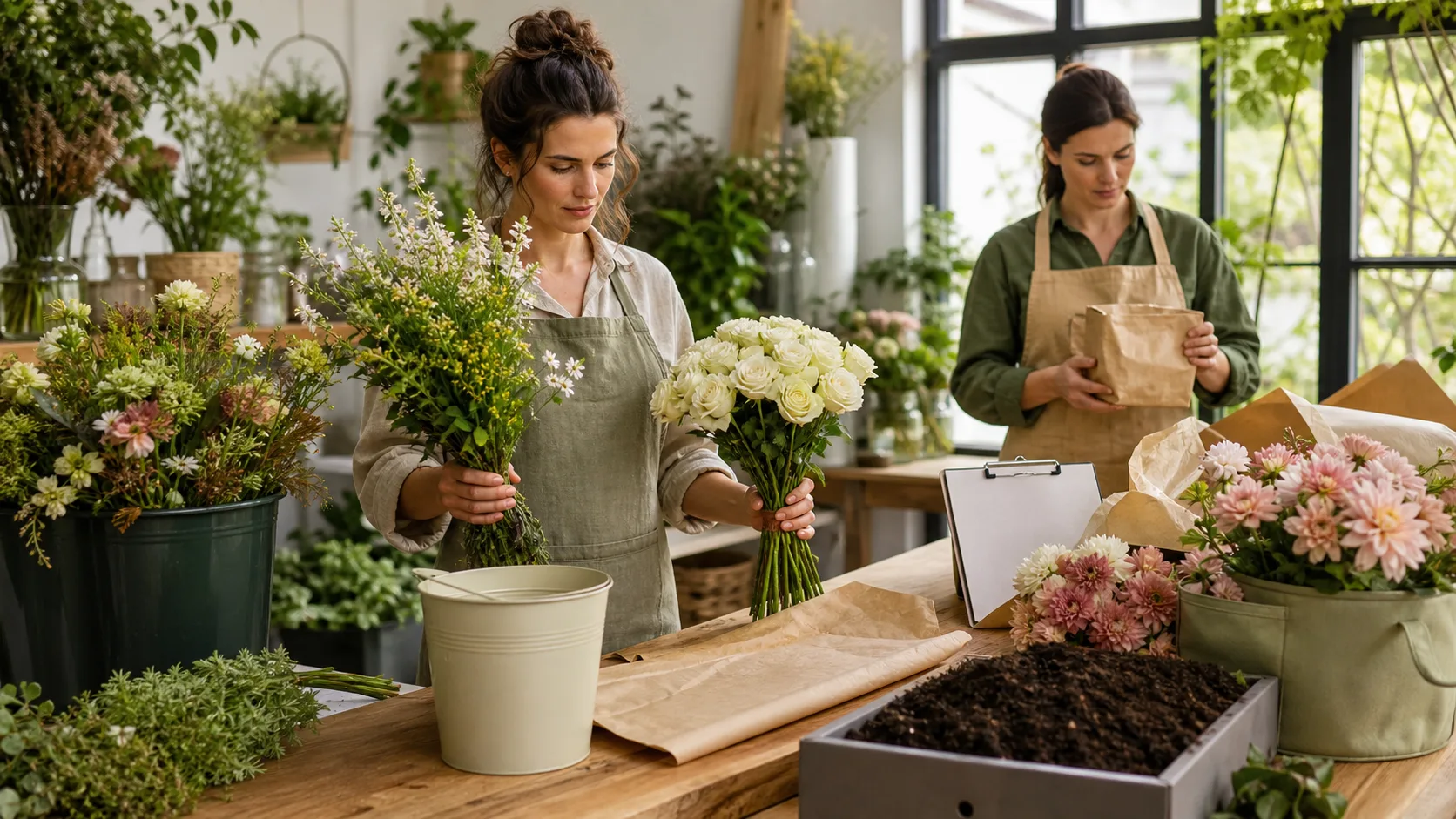
To spot foam-free mechanics, look for signs like:
If you are not sure, you can simply ask, “Do you use floral foam in your arrangements or installations?” A thoughtful florist will be willing to explain where they still use it, if at all, and what alternatives they are exploring.
Low-waste design goes beyond foam and includes:
At Petal and Bulb, we love that more people are asking about this. Our bespoke, garden-inspired style naturally works well with foam-free approaches, especially for autumn centrepieces and smaller, intimate gatherings where loose, organic movement is the goal.
Sustainability is also about what happens around the flowers. Packaging, delivery, and behind-the-scenes waste can quietly undo a lot of good intentions.
Traditional floristry often relies on:
Greener options look more like:
If you are checking a florist’s green claims, you might ask:
Delivery is another hidden piece of the emissions puzzle. In a large area like Surrey and across Metro Vancouver, it helps when florists:
A transparent florist will happily share where they are still working on things. They might say they currently use standard vehicles but plan their routes to reduce unnecessary trips, instead of claiming “zero-impact delivery” without explaining how that works.
When you put it all together, a simple checklist can keep you from getting greenwashed the next time you choose an eco-friendly florist in Surrey. Ask about:
It helps to reward honesty and progress, not just perfection. A florist who openly shares where they are improving and what they are still working on is usually a better environmental partner than one with glossy, vague claims. When you choose that kind of florist, you are supporting better habits across the local flower industry and encouraging more growers and designers to move in the same direction.
At Petal and Bulb, here in Surrey, we build our work around seasonal sourcing, thoughtful design, and caring relationships with our clients and community. We know flowers carry feelings, and it matters how they get from the field to your hands. As you plan for fall gatherings and the celebrations that follow, this checklist can help you ask better questions, compare answers from different florists, and choose the one whose flowers fit both your aesthetic and your environmental values.
If you are ready to plan flowers that reflect your values and your style, we would love to help. As an eco-friendly florist in Surrey, Petal and Bulb focuses on sustainable choices without compromising beauty. Tell us about your celebration and priorities, and we will design a floral plan tailored to you. To start a conversation about your wedding or event, simply contact us today.